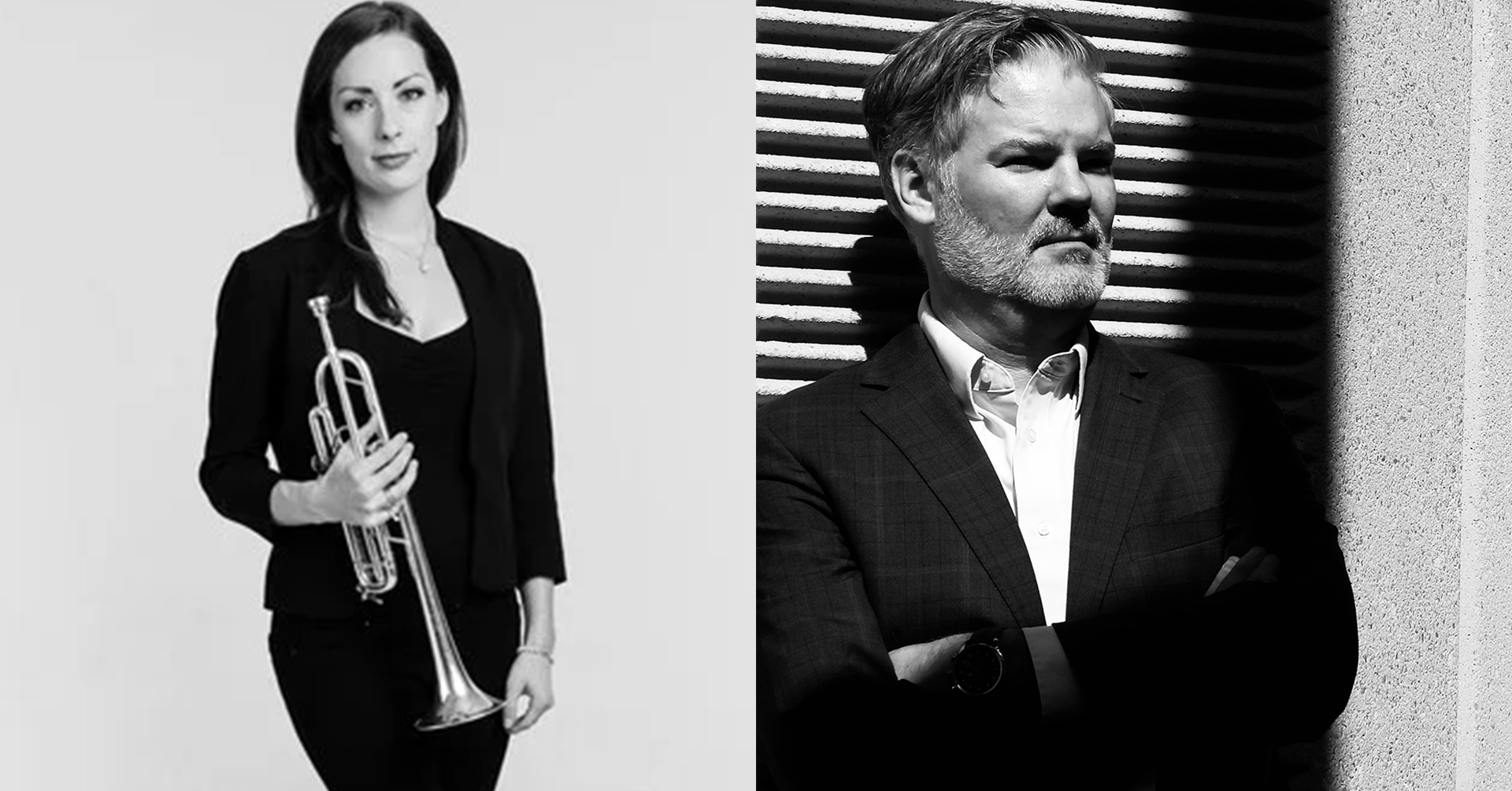
Professors Jean Laurenz and Dan Cavanagh are winners of a 2026 Creative Arts Award. Laurenz was awarded an Emily Mead Baldwin Award in the Creative Arts and Cavanagh was awarded a Creative Arts Award.
The Division of the Arts at UW–Madison, with the help of a cross-departmental panel of judges, has awarded more than $120,000 to a “select a group of outstanding faculty, staff, and students.”
The award recipient’s work and research is spread across 14 different areas of study and runs the gamut, from music, theatre and drama, arts education, fashion design, painting, photography, and more. A special public ceremony to honor their achievements will be held on April 20, 2026, at 5:00 p.m. in the H.F. DeLuca Forum inside the Discovery Building.
Laurenz’s project DESCENDED is a multidisciplinary performance work inspired by the writings and legacy of 19th-century author Lafcadio Hearn. Blending chamber music, theater, film, and media art, the project reexamines folklore, marginalized histories, and enduring social questions through a contemporary lens. Created by Laurenz (Hearn’s great-great-grandniece) with multimedia artists Maria Finkelmeier and Greg Jukes, DESCENDED transforms Hearn’s ghost stories into an immersive, 55-minute live performance supported by sound, light, projection, and movement.
Her project proposes an international tour and series of public engagement events in locations central to Hearn’s life, including Cincinnati, New Orleans, Ireland, and Greece. By pairing performances with discussions, screenings, and readings, DESCENDED expands access to experimental multimedia performance while reconnecting Hearn’s work with the communities that shaped it.
Cavanagh’s project, “Redefining the Concerto Tradition,” will produce a CD-length recording of two major works that fuse composed and improvised music within the orchestral tradition. The first, Divining Reverence on the Far Eighty (2012), is a 40-minute piano concerto that integrates fully notated passages with improvisatory sections, redefining the relationship between composer, performer, and ensemble. The second, Provocateur, is a newly composed concerto grosso for chamber orchestra and three soloists—piano, bass, and drumset—that expands this dialogue by requiring all soloists to navigate both structured and spontaneous musical environments.
The Wisconsin Chamber Orchestra will serve as the recording orchestra, with internationally acclaimed bassist Linda May Han Oh joining as a soloist. Additional orchestras, including the Monterrey Symphony and Norman Philharmonic, plan to program Provocateur, amplifying its reach.