Ensembles
Find your ensemble
Bands
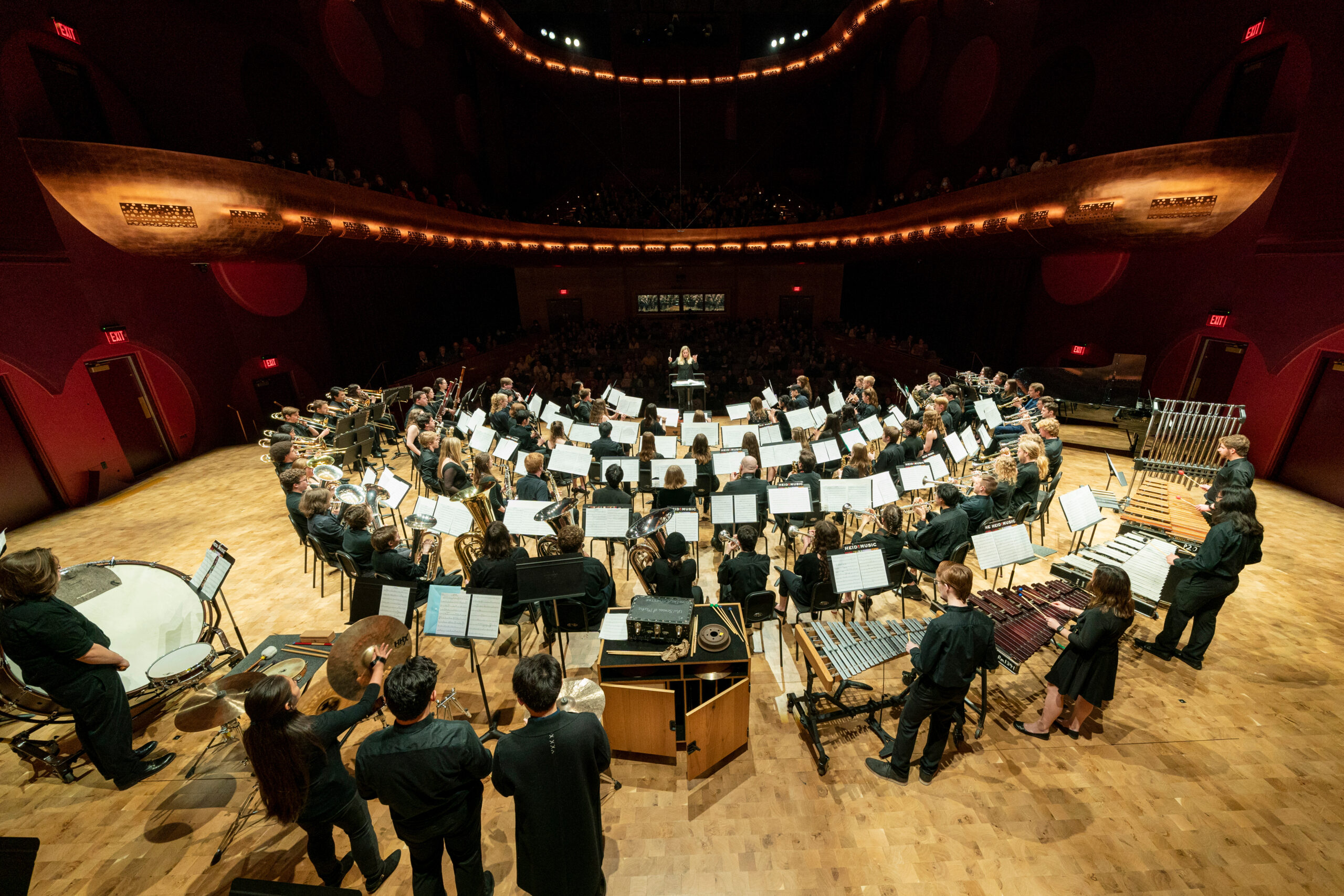
Our Bands program offers an array of performance opportunities for both music majors and non-majors.
Choirs
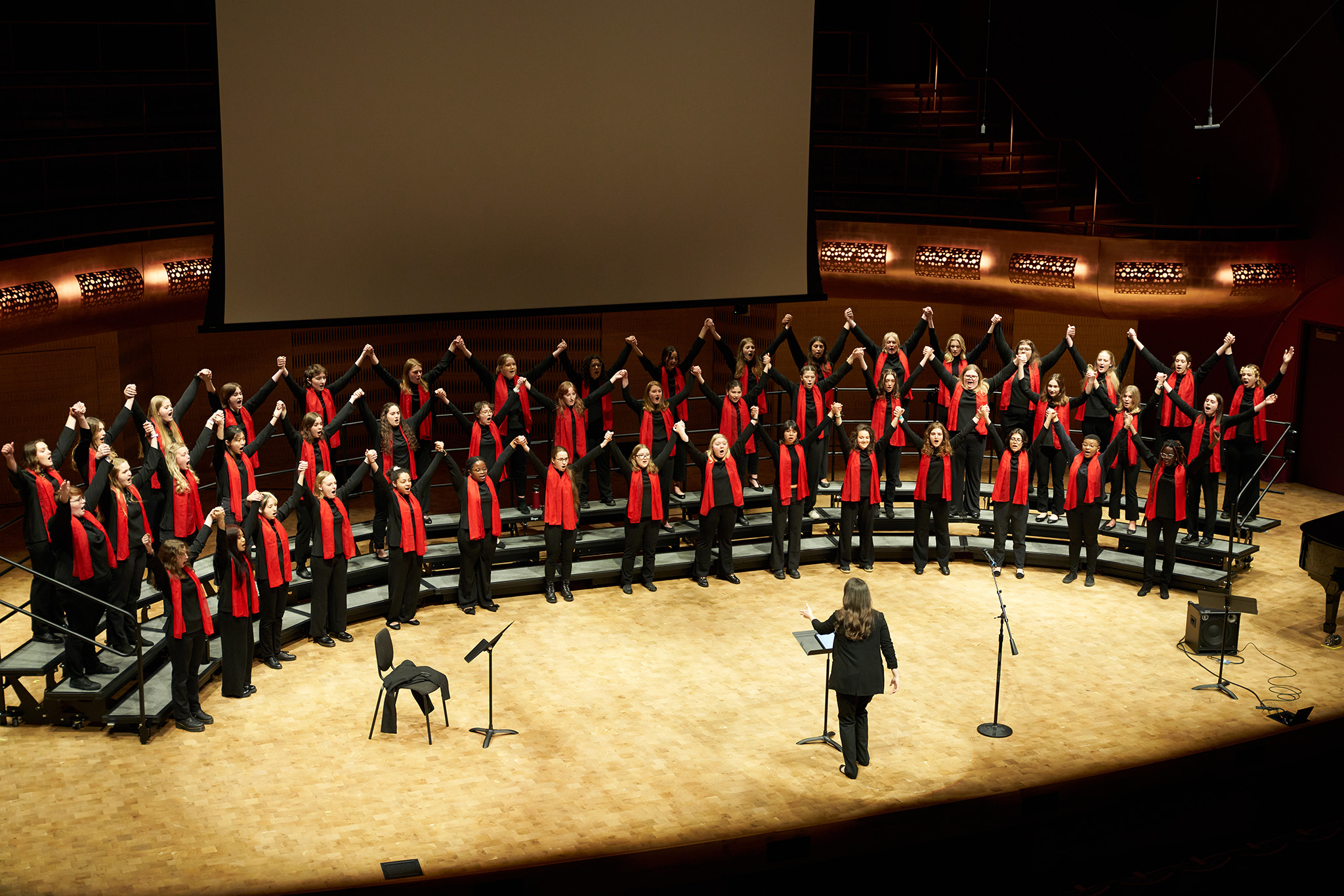
Our Choir program gives you the opportunity to prepare diverse literature and enhance your singing ability. There’s a choir for everyone at UW–Madison.
Jazz
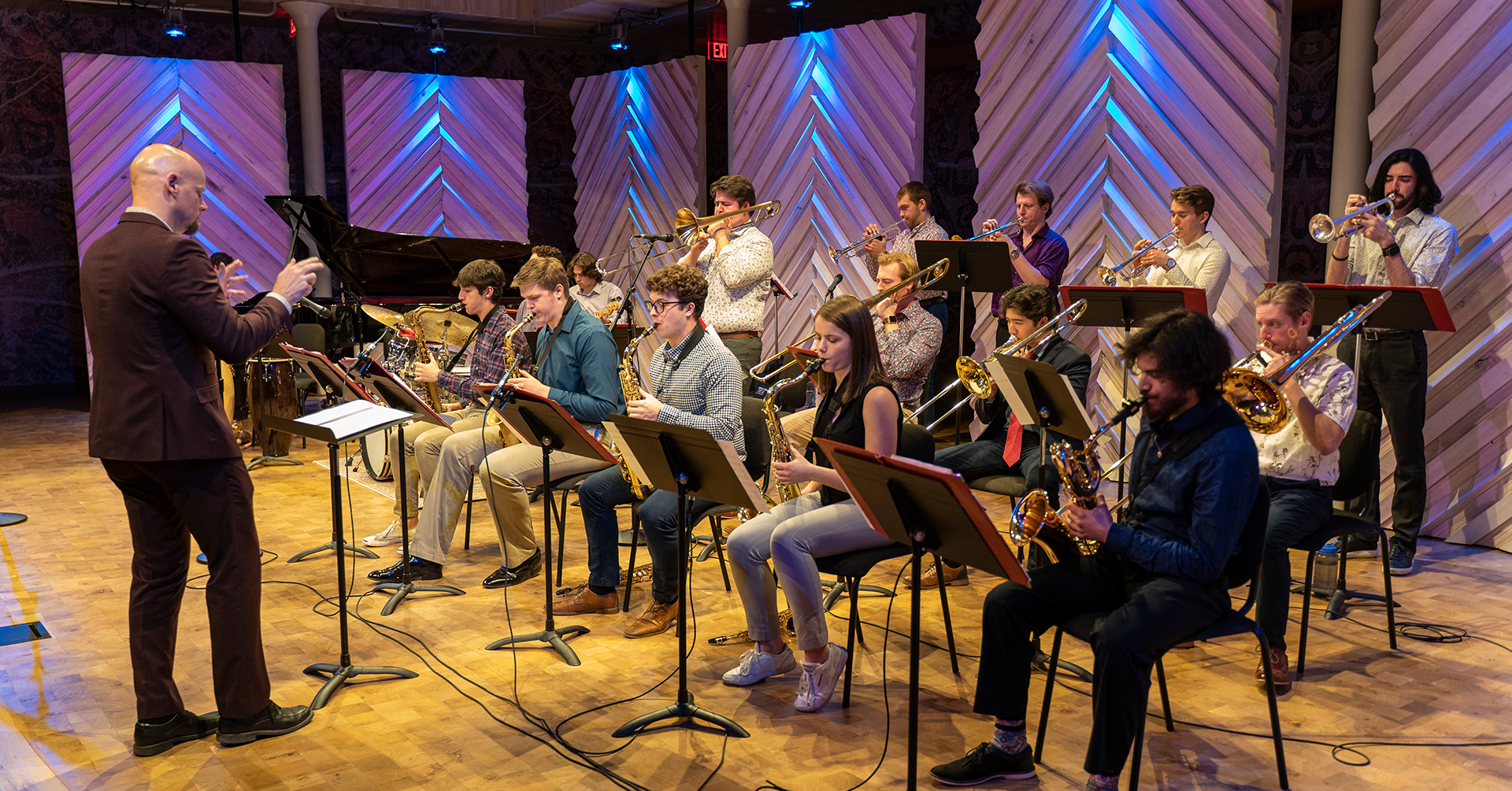
Our Jazz program offers a wide variety of ensembles for undergraduate and graduate students to join, both music majors and non-music majors alike.
Opera
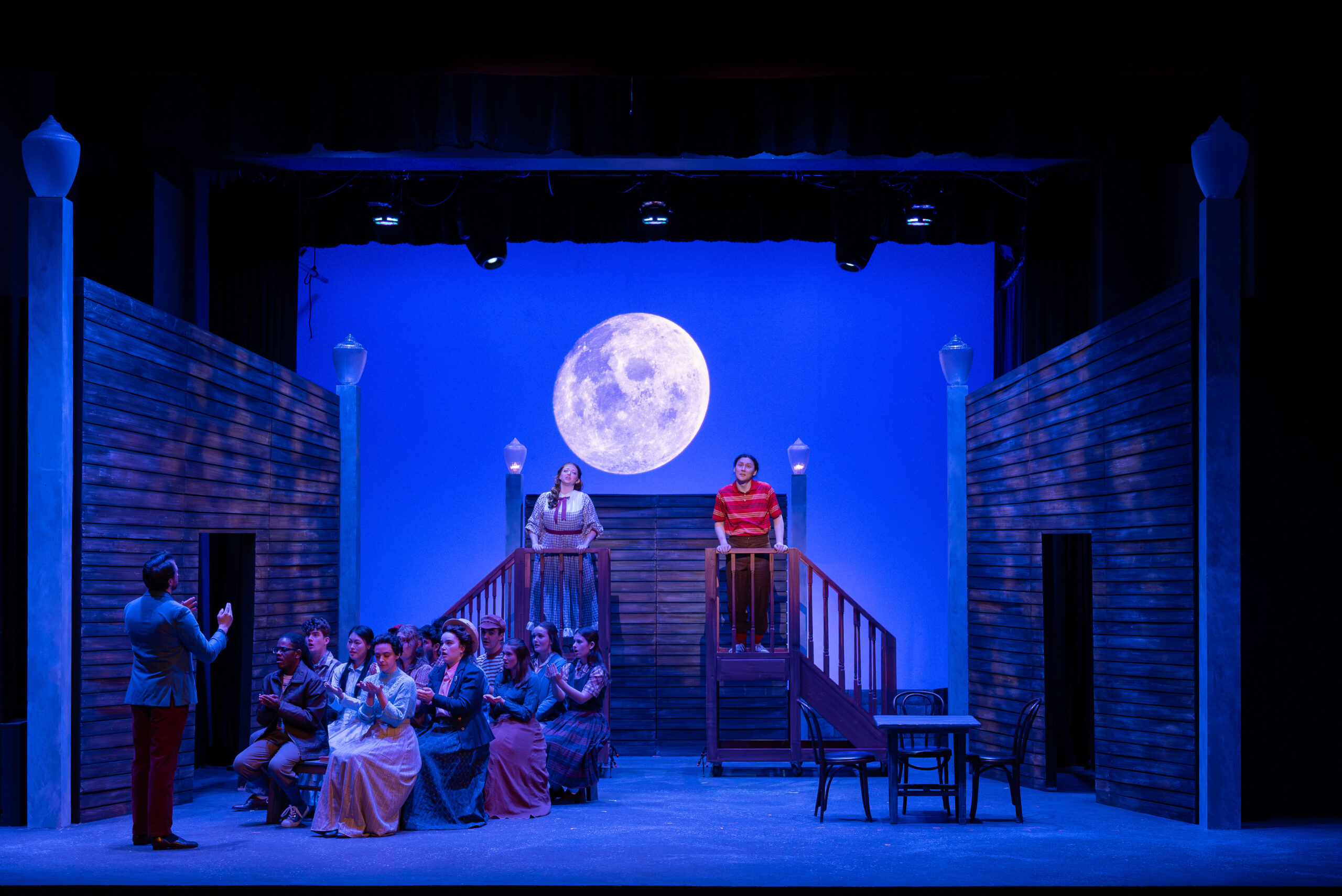
Each year, University Opera presents a season of two fully staged operas, and evenings of opera scenes and one-act operas.
Orchestras
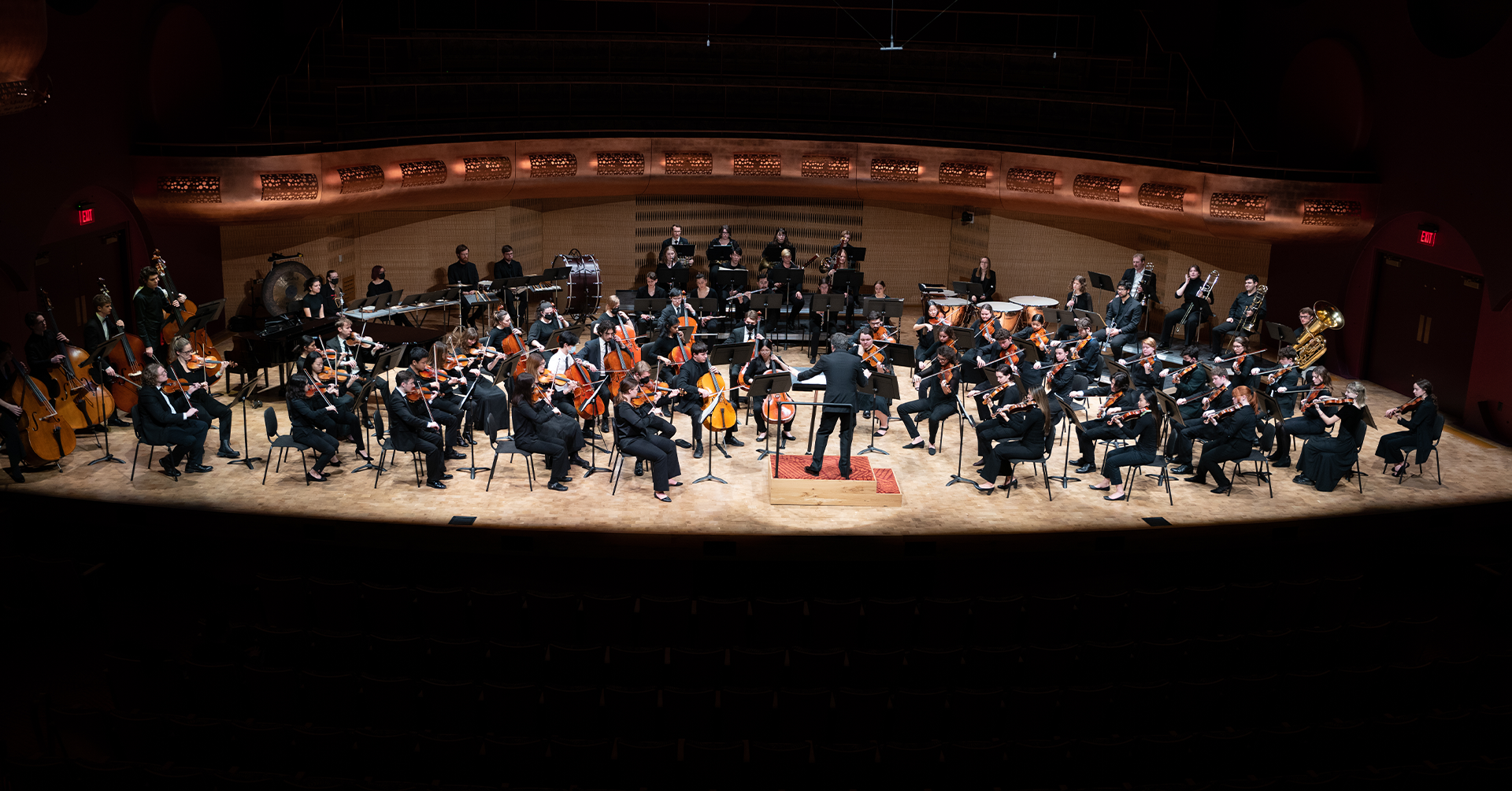
Our Orchestra program offers performance opportunities and orchestral training for music majors and non-music majors.
Chamber ensembles
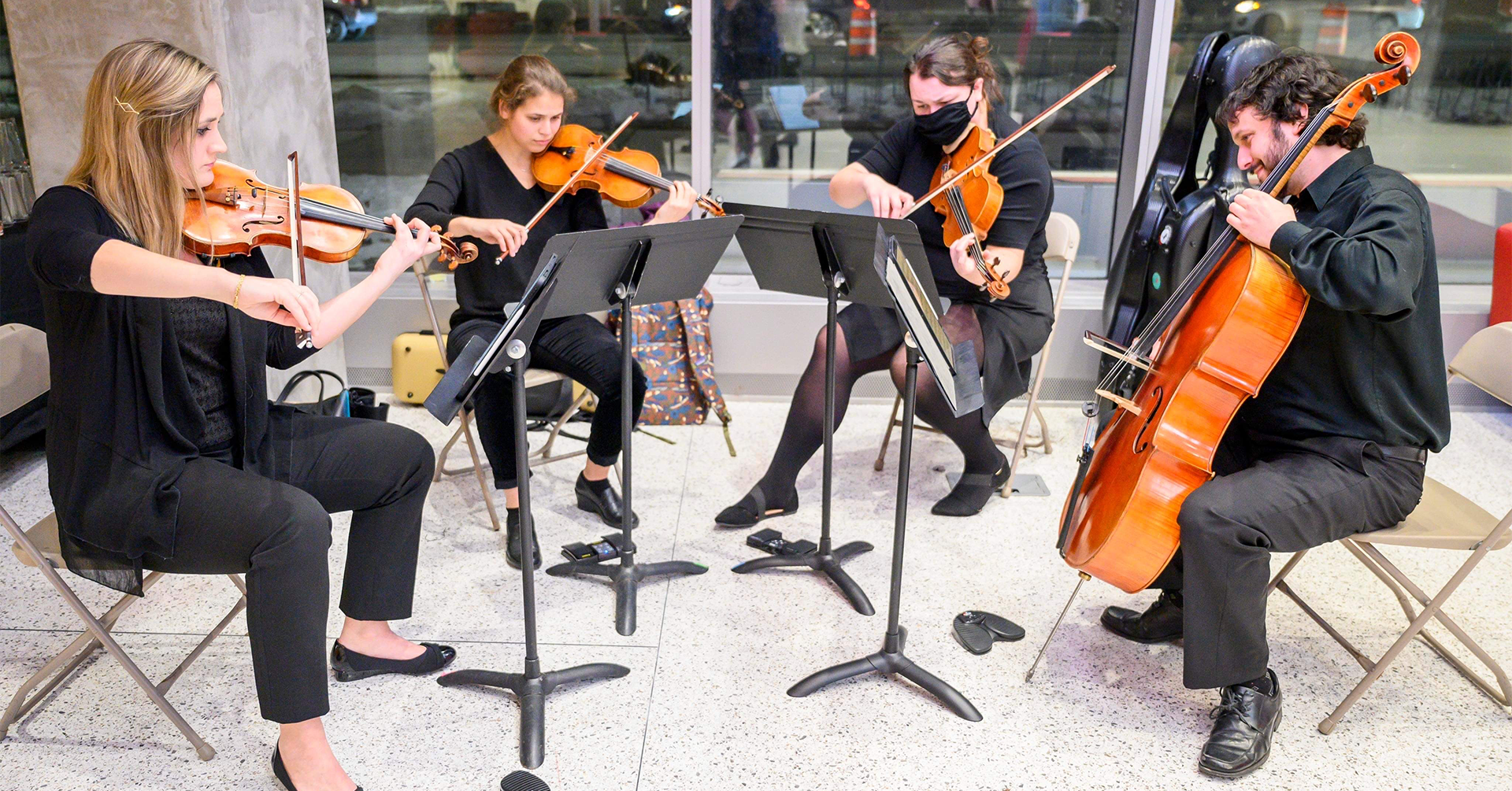
From graduate string quartets to an electro-acoustic improvisation ensemble, there is a chamber ensemble for every student.
Student Chamber Ensembles
C8dence is a vocal chamber ensemble that performs without a conductor. This class will teach you how to communicate with your fellow singers to form a cohesive and flexible ensemble. Repertoire will be focused on contemporary classical music, with an emphasis on composers outside the traditional western canon. Styles to be studied and performed include, but are not limited to, minimalism, shape note singing, belting, folk singing, and extended vocal techniques. Students may have the opportunity to arrange and/or compose tunes for this ensemble and to work with professional composers or student composers from the School of Music.
Sarah Brailey, director
Participation in $2 Broom is open to any School of Music student on any instrument or voice. The group functions mostly as an improvising ensemble, though members may choose to write for the group as well.
$2 Broom rehearses in EARS (the Electro-Acoustic Research Space), a state of the art facility equipped with computers, software, MIDI instruments, and more. Students play their own instruments and learn to use the instruments in EARS. All music is improvised, and in rehearsals students learn how to create a piece of music cooperatively.
Typical rehearsals begin with guided improvisations using limiting rules and with free improv exercises. As students become more comfortable at improvisation, the rules tend to vanish and the music-making becomes more intuitive and creative. By the end of the semester, students are able to go on stage with no printed music and perform for an hour or more with complete comfort.
Computer electronics and hardware pedals in EARS can completely transform the sound each player makes.
The UW–Madison has multiple active percussion chamber ensembles that rehearse and perform regularly. The Chamber Percussion Ensemble (formerly Western Percussion Ensemble) is a chamber group dedicated to performing significant and interesting works. Repertoire from diverse trends in twentieth- and twenty-first-century chamber composition is explored with an emphasis on new compositions for percussion. Guest artists regularly perform with the Ensemble, and guest composers are often featured.
The World Percussion Ensemble is dedicated to the performance of significant percussive styles from around the globe. Traditions from various cultures—Cuba, Brazil, India, the Middle East, and more—are explored through performance and research, and most of the music selected is studied and practiced in the oral tradition. The Ensemble works diligently to present the music performed in its traditional folkloric settings. In 2010, the Ensemble won the Percussive Arts Society International World Percussion Ensemble Competition, resulting in a feature performance at the Percussive Arts Society International Convention (PASIC).
In addition to the Chamber and World Percussion Ensembles, the graduate percussion students perform with the Graduate Percussion Group. This chamber ensemble, which performs regular concerts on and off campus, is uniquely autonomous, allowing members to have primary input in repertoire selection, musical decisions, and more. With coaching from the percussion faculty, this ensemble provides extensive experience in advanced chamber ensemble preparation and performance in a musically democratic environment.
Anthony Di Sanza and Tom Ross, directors
Collegium Musicum is an early music ensemble dedicated to performance on the school’s collection of period instruments. The group includes strings, winds, and vocalists. Prior experience in early music performance is not a prerequisite.
Taya König-Tarasevich and Sean Kleve, directors
Laura Schwendinger, director
Javier Calderon, director
The Marvin Rabin String Quartet is the Mead Witter School of Music’s graduate string quartet. As project assistants, the quartet performs concerts at the Mead Witter School of Music and other university events, as well as performing community outreach. Members work closely with faculty, including the Pro Arte Quartet. The Rabin String Quartet has worked with notable guest artists, including violist Nobuko Imai, violist Lila Brown, and members of the Takács Quartet.
The Perlman Piano Trio is funded through endowed scholarships generously provided by Dr. Kato Perlman.
The UW–Madison Horn Choir, founded in 1974, rehearses 90 minutes per week and performs an annual holiday concert at the Chazen Museum. In the spring semester, the group reconfigures as Twisted Metal, an all-horn, rock-and-roll band for which the students arrange all the music. An extension of horn studio class, the Horn Choir is comprised primarily of horn majors and the standard of performance is high. It meets together as a performing group while constantly rotating part assignments, providing students with extensive training toward advanced section playing. Prof. Grabois’s rehearsal direction explores detailed and practical ideas on interpretation, styles and periods of music, section blending, and other significant elements of performance.
The Horn Choir regularly performs at regional and national music conventions and horn workshops. In fall 2005, the Choir worked extensively with composer, conductor, and horn player Gunther Schuller, who conducted and coached the Choir on his monumental work for 16 horns, Lines and Contrasts.
Layan Atieh, director
1 credit
The UW–Madison Low Brass Ensemble is a collective of the Trombone Choir and Tuba/Euphonium Ensemble. Low Brass rehearses weekly and performs at least one concert each semester, which features Low Brass as a whole as well as the Trombone Choir and Tuba/Euphonium Ensemble. The group plays original compositions, transcriptions, and arrangements of all kinds of music. This ensemble is open to any UW–Madison student who passes an in-person audition. The group also provides a wonderful opportunity for low brass players to double: trombonists can spend some time on euphonium, or tuba and euphonium players can play tenor or bass trombone, for example.
Mark Hetzler and Tom Curry, directors
The Wisconsin Saxophone Ensemble is dedicated to the exploration and performance of repertoire featuring large combinations of the saxophone family. Members of the ensemble will encounter transcriptions and original works and will take part in the creation of new music for the medium. The Saxophone Ensemble rehearses once per week and plays at least one concert per semester.
Most participants are undergraduate and graduate music majors from the saxophone studio, but non-major students are welcome.
The Wisconsin Trumpet Ensemble increases ensemble skills and presents the opportunity to study trumpet-specific repertoire. The ensemble includes trumpet undergraduate and graduate music majors and rehearses during the weekly studio class time in the first half of spring semester. Graduate students provide mentorship during rehearsals and are encouraged to take on leadership roles in repertoire selection, concerts, and competitions.
The Trumpet Ensemble’s repertoire spans from the Baroque to recent compositions. Student members have contributed arrangements to the Trumpet Ensemble’s library. In addition to on-campus performances, the Trumpet Ensemble gives outreach concerts at area churches and senior centers, performs at other state schools of music, and competes at the National Trumpet Competition.
Jean Laurenz, director
The Badger Bassoon Ensemble is a chamber group dedicated to exploring large bassoon ensemble repertoire throughout the academic year, culminating in an unmissable showcase each spring. Through their work in the ensemble, students further develop their performance, collaboration, organization, and communication skills, while building connections within the bassoon studio and the broader Mead Witter School of Music community.
2026 marked an exciting milestone with the inaugural Badger Bassoon Ensemble concert on campus. Eleven bassoonists came together for an eclectic program including Disney classics, Hailstork, Tchaikovsky, Lady Gaga, and more. The concert also featured individual students and smaller ensembles, allowing students to explore a variety of configurations throughout the program.
Eleni Katz, director
Frequently Asked Questions
Yes. If you would like to audition on multiple instruments, you will need to create a separate audition for each instrument. To sign up for additional auditions times/instruments, email meo@music.wisc.edu.
Please review our Instrument Shop Policies and complete the Instrument Rental Request Form only after reading the policies.
Auditioned ensembles require a permission number in order to enroll. Upon completion of an audition, a permission number will be shared with you along with your ensemble placement results.
For questions regarding permission numbers, email meo@music.wisc.edu.
No. Course enrollment for ensembles will take place after the audition is complete and ensemble placements are shared.
If you have a schedule conflict with one of the ensembles you are auditioning for, please contact our academic advisor at ugradadvisor@music.wisc.edu before registering for an audition. Changes in placements after the audition results have been posted are not guaranteed.
If you intend to major in music, submit the request for a School of Music tour and indicate your interest in observing an ensemble rehearsal.
If you do not intend to major in music but would like to observe an ensemble rehearsal, reach out directly to the ensemble’s conductor for more information.
Please contact our academic advisor at ugradadvisor@music.wisc.edu.
No. Because auditors observe, rather than participate, in courses, they are generally not allowed in performing arts classes at UW–Madison. See acsss.wisc.edu/senior-guest-auditors/established-rules-and-requirements
Please review our Locker Rental Policy.
Lockers are for students enrolled in at least one School of Music class, including any performance ensemble.
Please review our Practice and Rehearsal Room Use Policies.